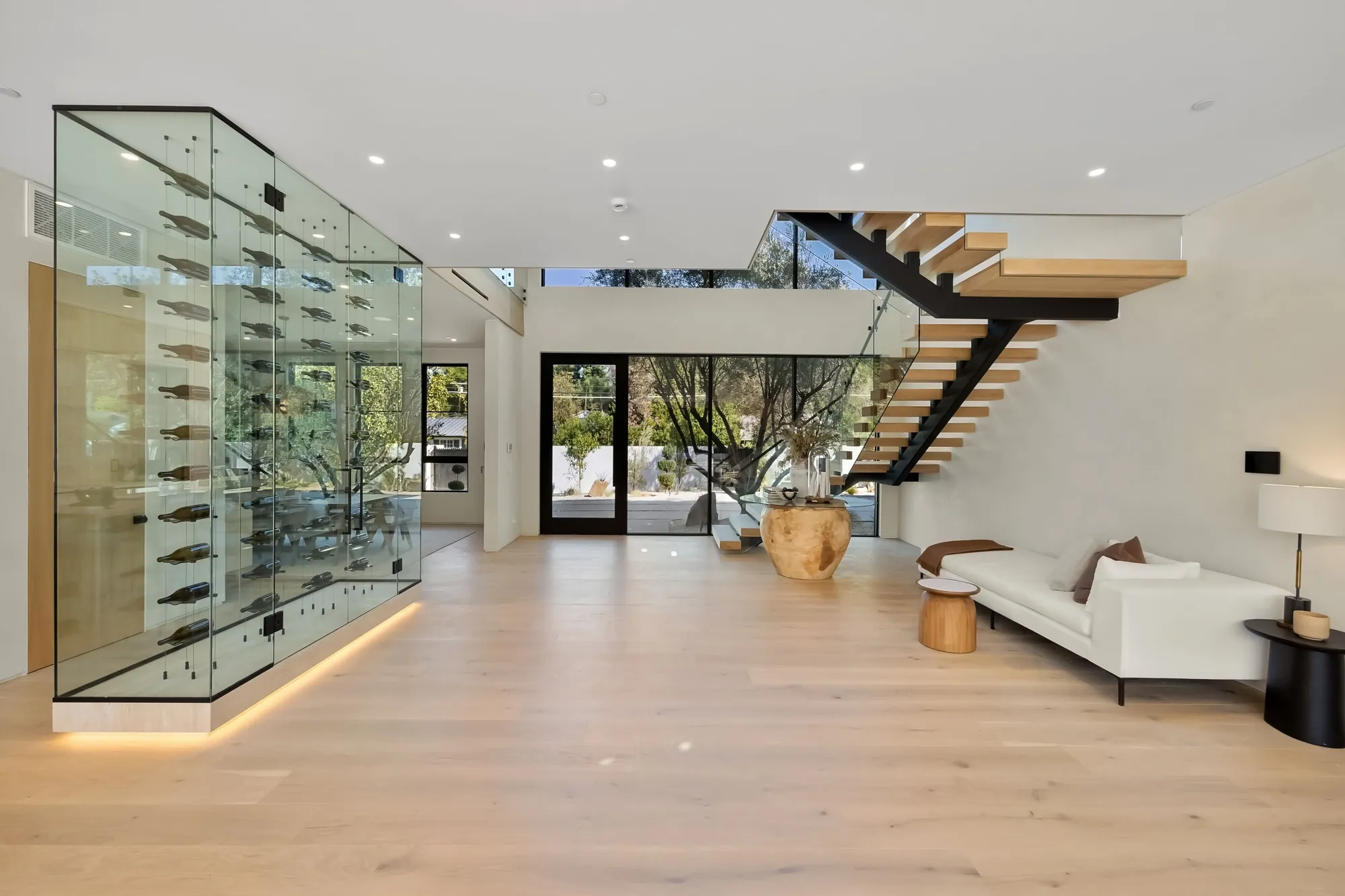

Design inspiration: a glass wine room turns bottles into art.
Dinner is over. The candles are low. Across the room, a glass wall glows softly, and rows of bottles seem to float in the dark. Someone gets up to find one more bottle.
Then the trouble starts. The light comes from above, the labels face forward, and soon they are pulling bottles out to read them. A good wine room makes that step unneeded.
Light a wine room from the front of the racks, not from the ceiling. Use warm 2700K LED strips at the front edge of each shelf. Keep the drivers outside the cold room, and put the lights on a motion sensor.
Keep the room outside the glass a bit darker. Then the glass looks like a window, not a mirror.
Quick Tips
Light labels from the front
Use one warm color, 2700K
Ask for the R9 number for deep reds
Keep drivers outside the cold room
Use a motion sensor and a few simple scenes
A wine room is not a display case. It is a small, cool room where people look for things. It just happens to have a glass wall.
Good wine room lighting has three jobs, in this order. Help you find a bottle. Show off the collection. Add as little heat as possible.
Most wine rooms do the second job and skip the first. That is the difference between a lighting design and a lighting layout.
Glass shows whichever side is brighter. If the hall is brighter than the wine room, you see your own face, not the wine.
So the fix is less light outside, not more light inside. Move the nearest ceiling light back so it hits the floor, not the glass. Let the dining room dim when the wine room lights come up.
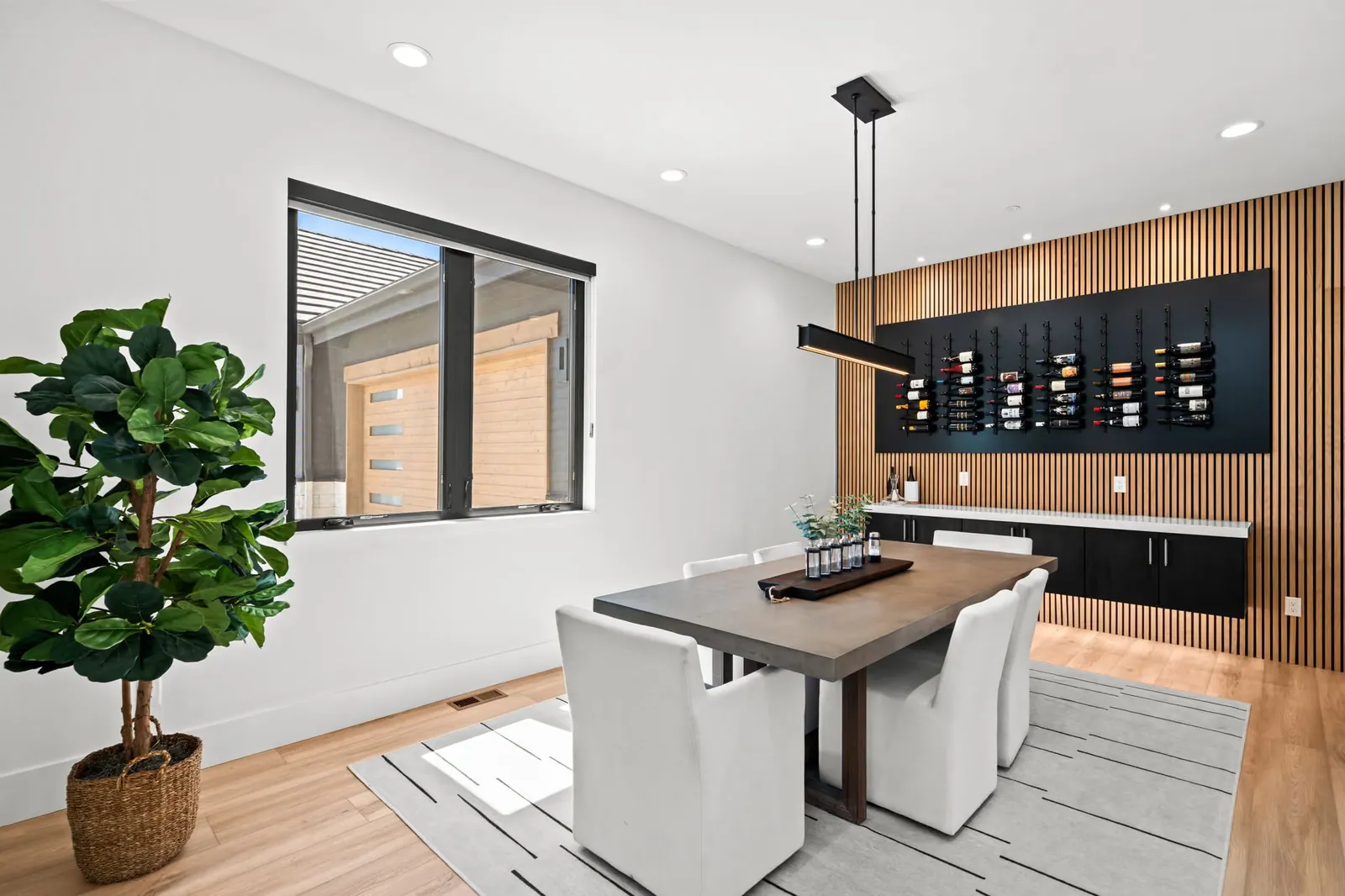
A ceiling light hits the tops of bottles. A label four rows back gets almost nothing. That is why bright wine rooms can still feel dark.
Put an LED strip in a channel at the front edge of each shelf, aimed a little up and back. It brushes across the labels and stays out of your eyes.
Back light on a display wall makes red wine glow a deep garnet. It looks great, but you still cannot read the label. Pair it with front light you can turn up.
LEDs make little heat, but their drivers do. If a driver sits inside the cold room, the cooling unit has to fight it.
Move the drivers to a nearby closet. Label them, and make them easy to reach. Never let a light touch a rack full of bottles.
Good LEDs give off almost no UV light, which is what harms wine most. The real risk is a room left lit all day. A motion sensor fixes that.
Start at 2700K. Warm light makes oak, stone, and brick look rich, and it keeps red wine looking deep. In a room of pale stone and white oak, 3000K can work too.
Ask for the R9 number. It tells you how well a light shows deep red. With a weak R9, a fine Bordeaux can look brown. Every material reacts to light in its own way.
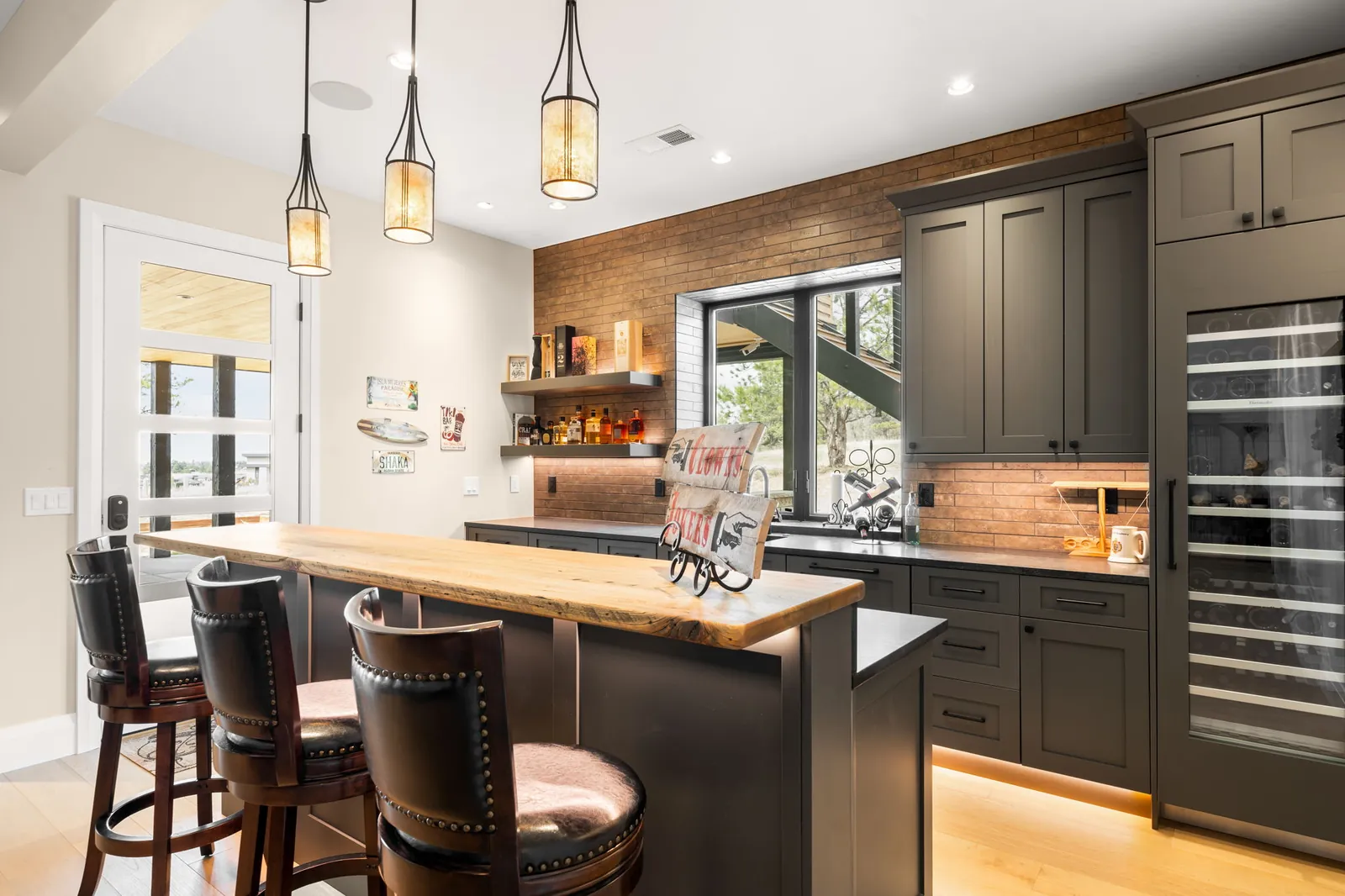
A light right over someone's head is harsh. Move it forward of the counter edge so the light comes in at an angle.
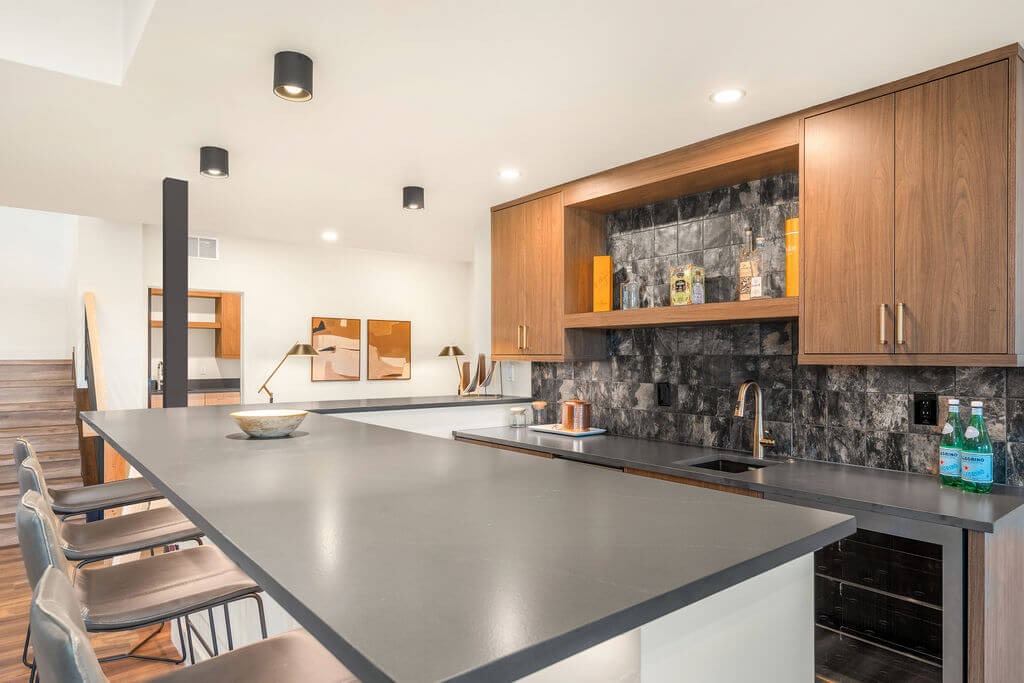
Keep the counter about as bright as the racks. A bright table next to dim racks makes the wine disappear.
A wine room lives between five and twenty percent. That is where cheap lights flicker or turn cold. Pick lights that dim smoothly down to one percent and stay warm, on a control system like Crestron.
Mount one clear keypad outside the door. Learn more about luxury keypads and building a room in layers of light.
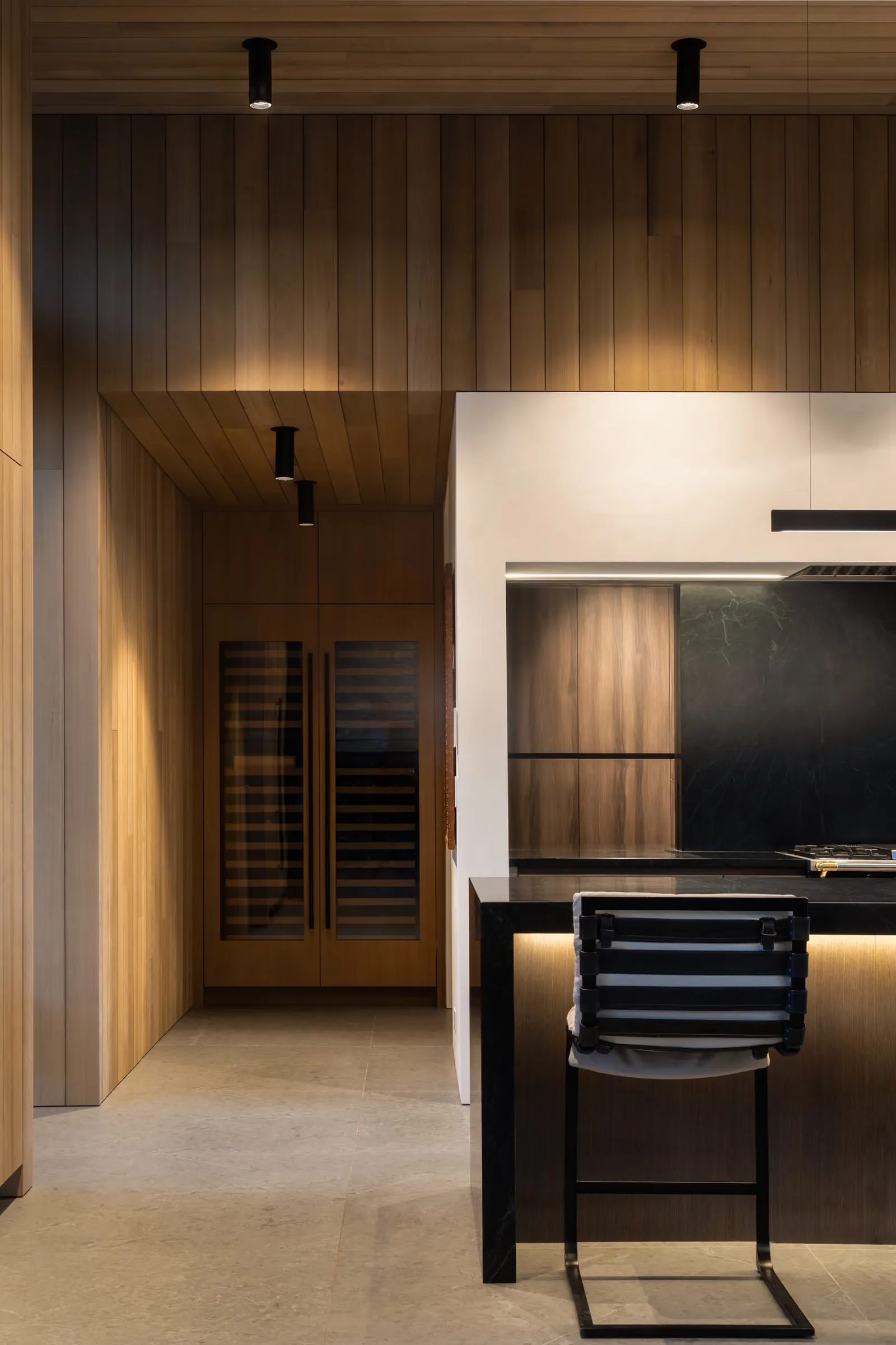
Shelf channels, driver closets, wire paths, and the keypad spot all belong on the cabinet plans. Once the racks are built, your choices shrink. Read why to bring your technology team in early.
"We asked for a home where the technology would disappear, and QAV delivered beyond anything we imagined. The lighting is perfect."
The Homeowners, Washington Park
QAV is a lighting and home technology firm in Centennial, Colorado. We design for homes across the Denver area and in mountain towns like Evergreen and Vail.
QAV is HTA Certified at the Estate Level, which puts us in the Top 1% of integrators in North America. Tyson Rabani sits on the Crestron Dealer Advisory Board for QAV. He is the only Colorado integrator on a board of about a dozen members worldwide.
Our Two Dog Vista project in Evergreen won the 2026 Crestron Home Technology Award for Best Entertainment Everywhere. See all our awards and recognition.
Wine rooms are part of ILLUMINATE, the QAV lighting service. Want to see the difference warm, front lit racks make?
Visit the QAV Experience Center in Centennial, open by appointment. Or contact QAV to start your project.

Use 2700K in most wine rooms. Warm light makes oak, stone, brick, and steel look rich. It also keeps red wine looking deep. In a room of pale stone and white oak, 3000K can work. Cooler light makes a cellar feel cold. Use one color in the whole room, including the tasting counter.
Good LEDs give off almost no UV light, and UV is what harms wine most. So the light itself is rarely the problem. The real risks are heat from the drivers and lights left on for hours. Mount the drivers outside the cold room. Put the lights on a motion sensor.
Labels stand up, so light them from the front. Put an LED strip at the front edge of each shelf or behind a display rail. Aim it a little up and back. Ceiling lights alone only hit the tops of bottles. That is why many bright wine rooms still feel dark.
Glass shows whichever side is brighter. If the hall is brighter than the wine room, you see the hall and yourself. Adding light inside rarely helps. Instead, dim the space in front of the glass. Move nearby ceiling lights back so they hit the floor, not the glass.
CRI tells you how well a light shows color overall. R9 tells you how well it shows deep red. A light can have a high CRI and a weak R9. Then a red wine looks brown and red labels look muddy. Ask for the R9 number on the spec sheet.
No. Lights left on add heat to a room meant to stay cool, and no one is there to see them. Put the main light on a motion sensor. It turns on when the door opens and off when the room empties. Put the display light on a timer that dims after guests leave.