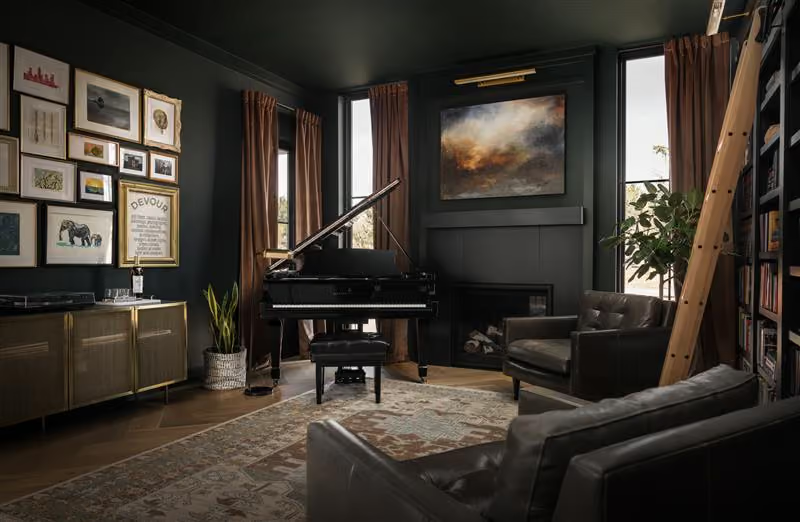


The City of Englewood began as a homestead settlement called Orchard Place and incorporated in 1903. Its own ZIP codes are 80110, west of Broadway, and 80113, east of it. But an Englewood mailing address does not always mean the City of Englewood. Cherry Hills Village and Greenwood Village incorporated in 1945 and 1950, after postal zones were already set, so they have borrowed ZIP codes from older neighbors ever since. Many Cherry Hills homes carry an Englewood address in 80113 or 80111, and many Greenwood Village homes one in 80111 or 80112. The city itself says 80111 and 80112 addresses are not within its limits at all.
That matters more than it sounds. Permits, lighting rules, and design review follow the city a home actually sits in, not the name on the envelope, so our first question is always which Englewood you live in.
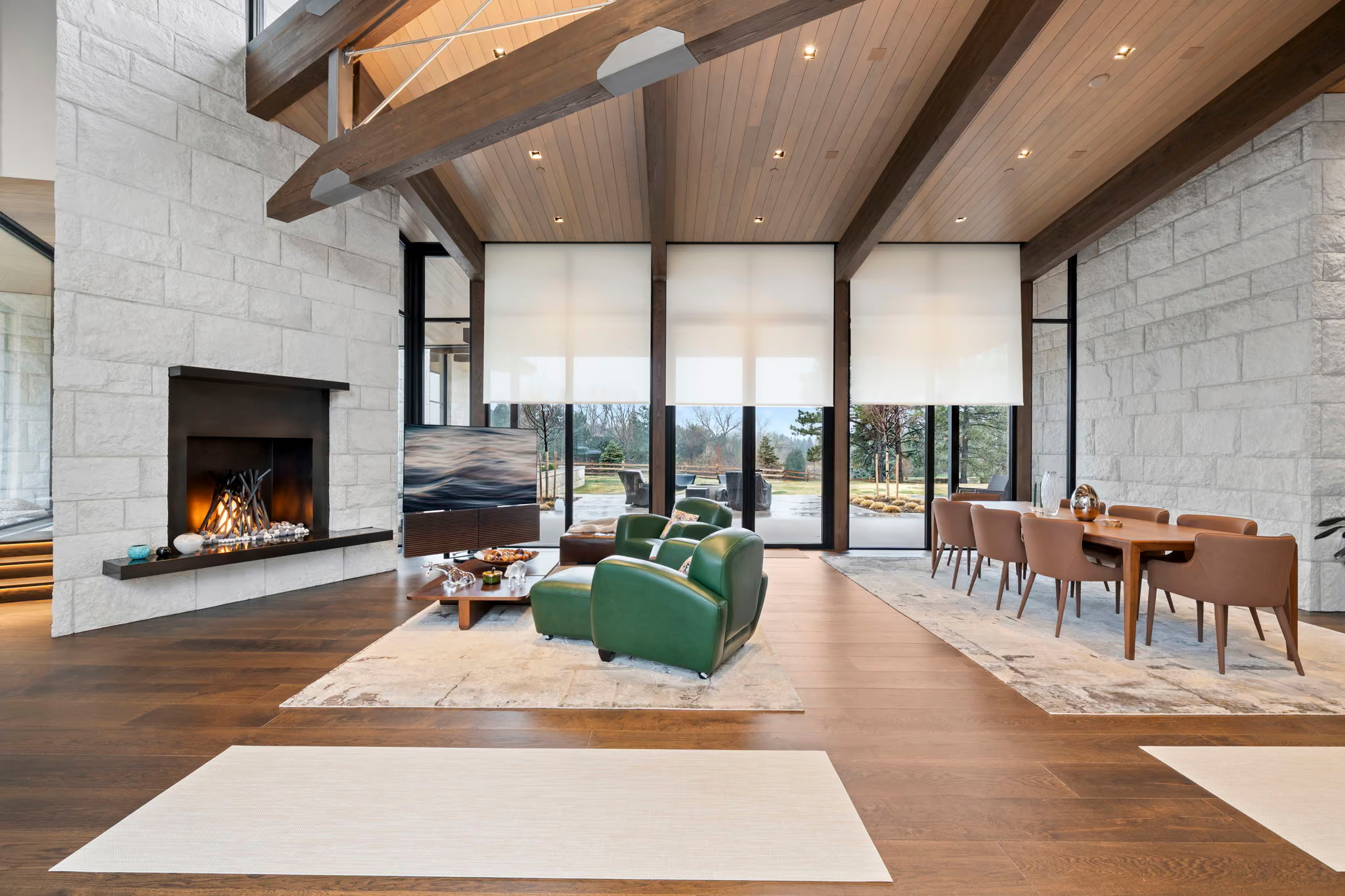
Inside the city, the houses are older than most of the metro. About 43 percent of Englewood's homes were built before 1940, and roughly nine in ten single-family homes predate 1961. Many are bungalows. Then there is Arapahoe Acres, 124 mid-century modern homes built between 1949 and 1957 and listed on the National Register of Historic Places, with open living areas and framed views.
If you have been here for years. Older walls were never meant to carry a network, and the original wiring was not planned for a house full of screens and speakers. We work around what is there, with wireless controls, careful wire runs, and fixtures that suit the era, so the house gains capability without losing its character.
If you are new to Englewood. You chose the porch, the trees, the walk to Broadway or Old Hampden. Start with the foundation: a network that reaches every room, then lighting that makes the old rooms glow in the evening. In a mid-century home, shades that disappear when raised keep the framed views exactly as the architect drew them.
If your Englewood address is really Cherry Hills Village or Greenwood Village, the lots are larger and the work is different: lighting the land, carrying the network to the far corners, sound across the patio that stays on your side of the fence.
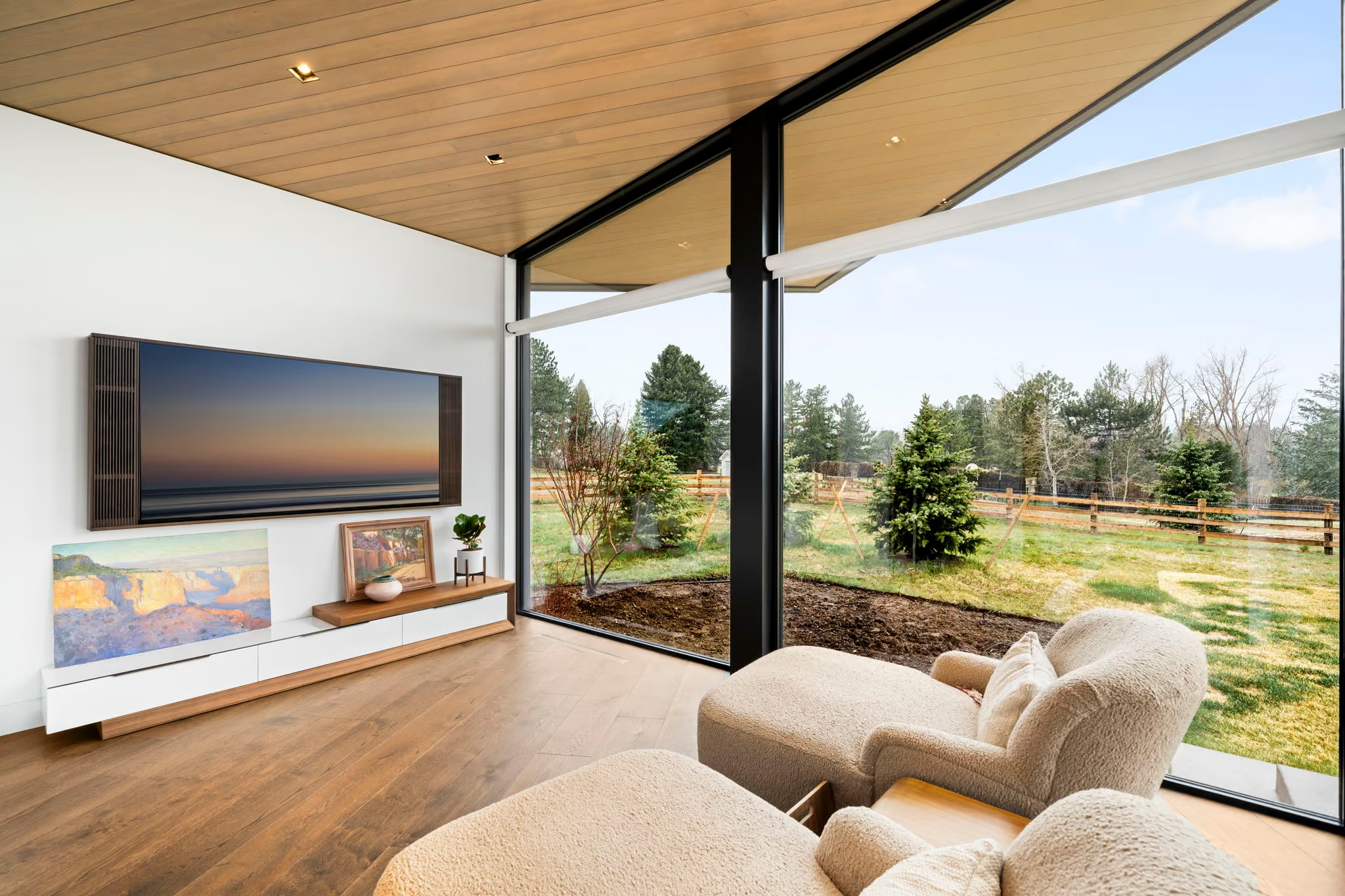
We have done this work here. Woven into Place, an estate in Cherry Hills Village, is the project that made QAV the first technology integrator in Colorado history to win a MAME award for home automation. Its motorized shades disappear into the timber ceilings, and the home also earned CE Pro Home of the Year Gold for Best Shade Control.
Explore the experiences we build, each designed to disappear into the home you already love.
An award-winning estate in Cherry Hills Village, a music-first home in Greenwood Village, and a lighting-led modern home in Estancia, on the Centennial and Aurora line. Three very different houses, each designed so you never see the work.

Yes. Downtown Englewood is about 30 minutes from our Experience Center in Centennial, near Centennial Airport, by way of I-25 and Hampden Avenue, and the Englewood addresses in Cherry Hills Village and Greenwood Village are closer still. We work throughout the Englewood mailing area.
Every home is custom, so the number follows the home and the life inside it. Many clients start with the foundation, or with one or two things done beautifully, and grow from there over the years. The most accurate answer comes from a short conversation about your house.
Not necessarily. The City of Englewood is served by ZIP codes 80110 and 80113, but parts of Cherry Hills Village and Sheridan share those codes, and the city says Englewood addresses with 80111 or 80112 are outside its limits entirely, in places like Greenwood Village, Cherry Hills Village, Centennial, and unincorporated Arapahoe County. The city offers an address search on its website, and we confirm jurisdiction before we design anything that needs a permit.
Usually, yes. Wireless keypads and dimmers can often go where the old switches are, and a network can be routed through attics, basements, and closets with very little visible work. We plan around the plaster, trim, and details that make the house worth keeping.
With restraint. These homes were designed around open living areas and framed views, so we hide speakers, recess or conceal shades, and choose fixtures that suit the era. The aim is a house that works like a new one and still looks exactly like itself.