

Since 1936, a star of 100 bulbs has lit the top of the Rock each holiday season, with a pause during the war years. It is the one light in Castle Rock everyone is meant to see from miles away. For nearly every other light in town, the goal is the opposite.
Castle Rock's lighting code exists to cut light pollution, glare, and light trespass, and in 2025 the Town Council updated it specifically to protect homeowners from light spilling in from their neighbors. Lighting that causes light trespass is prohibited, and so is upward-oriented lighting, except where the code allows it. That shapes how a home's exterior is designed. The drive, the entry, and the stonework can still be beautiful after dark, but the light has to be shielded, aimed, and dimmed with intent, landing on your house and path and nowhere else.
Then there is the question of where Castle Rock begins and ends. The Town itself points out that Douglas County High School, in the middle of what everyone calls Castle Rock, sits outside town limits. Plenty of homes with a Castle Rock address do too. The Village at Castle Pines carries a Castle Rock address but sits in unincorporated Douglas County, and its covenants permit no floodlighting and discourage tree uplights. Surrey Ridge, an equestrian neighborhood of acreage homes, is unincorporated as well. The rule book changes by neighborhood. The goal does not.
If you have been here for years. Castle Rock has grown from about 48,000 residents in 2010 to more than 88,000 today, and many homes were finished in that rush with whatever technology the builder offered. A remodel is the time to replace the switch banks, the dead speakers, and the patchy Wi-Fi with one quiet system that simply works.
If you are new to Castle Rock. Start with the view and work backward. Big glass toward Pikes Peak and the Front Range brings afternoon sun and glare, so motorized shades belong in the plan from the first drawing. And the Palmer Divide has its own weather. In May 2024, gusts reached 60 mph in Castle Rock, which is why we choose outdoor speakers and fixtures built to stay put and tie exterior shades to sensors that retract them when the wind rises.
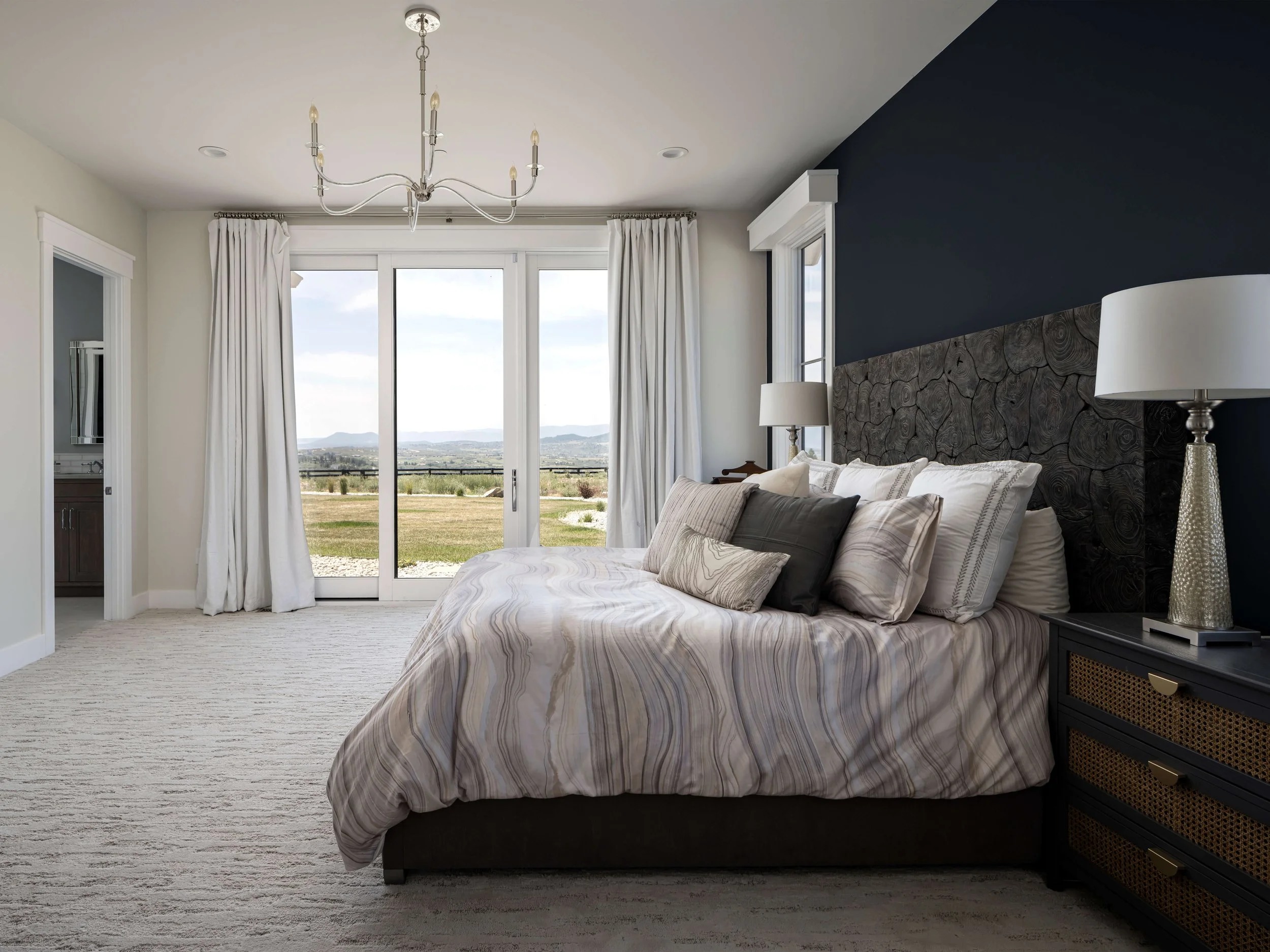
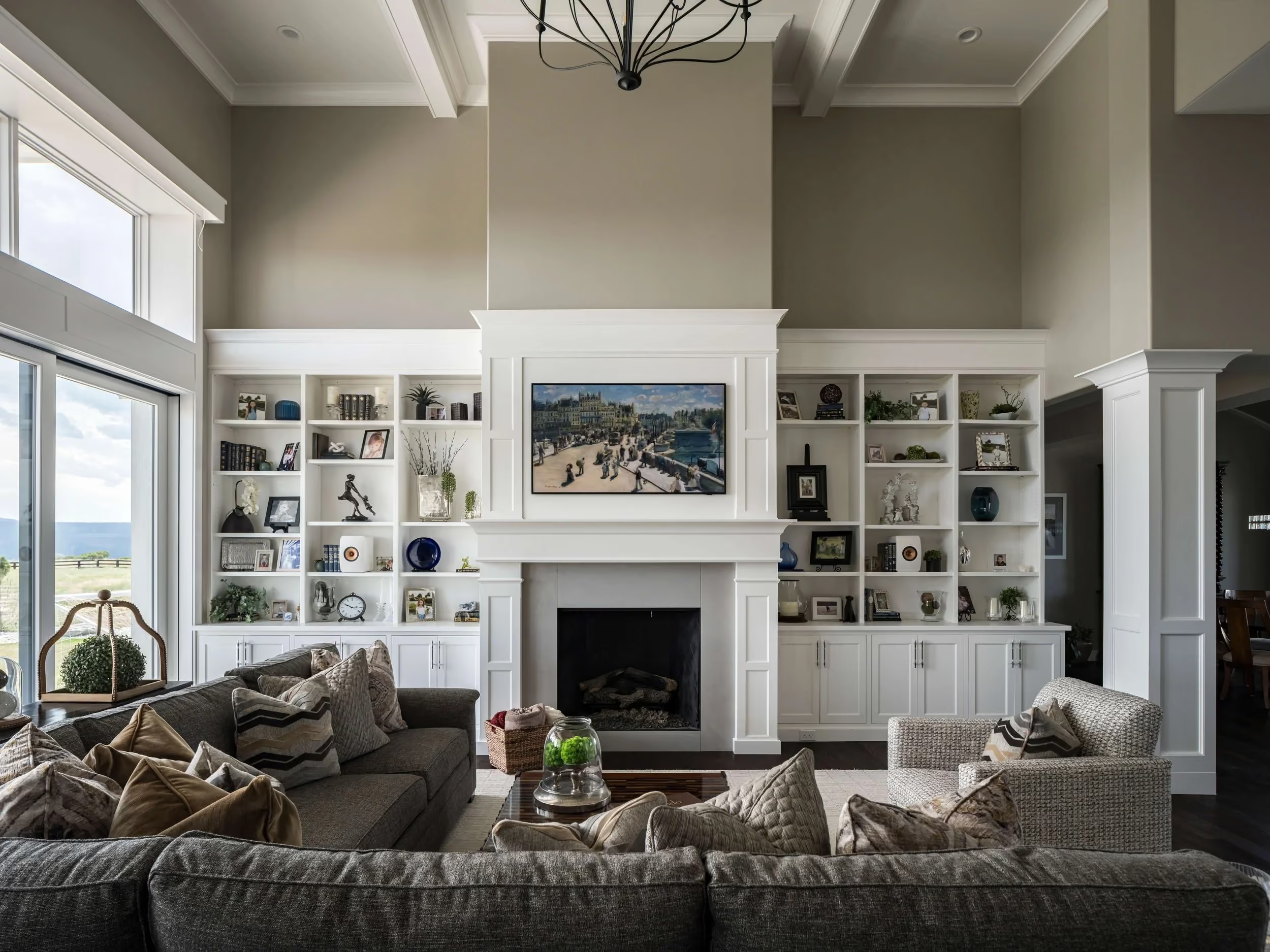
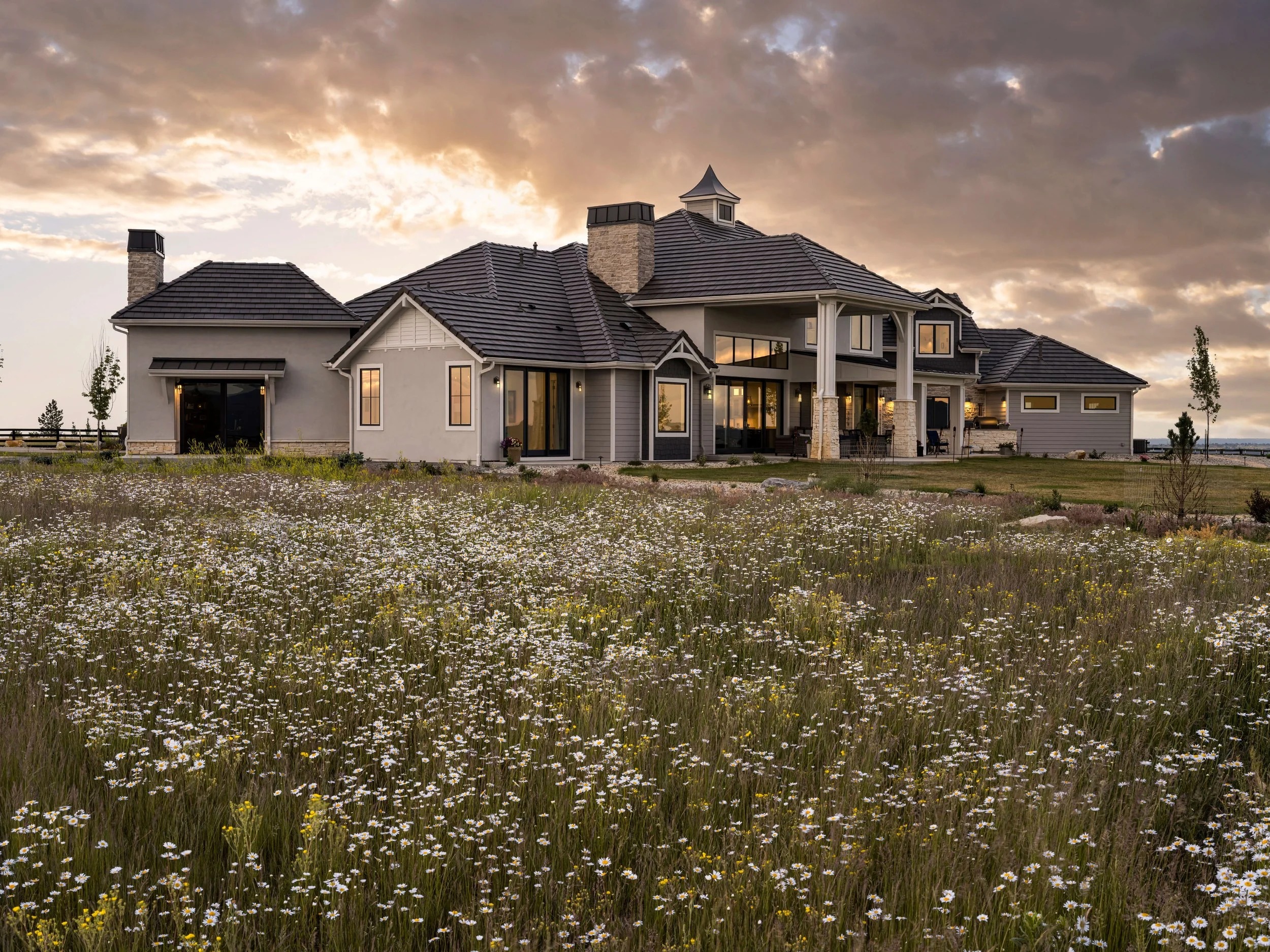
We have done this work here. At Stoney Ridge Manor, on thirty-five acres atop a Castle Rock mesa, QAV dressed a two-story wall of sliders in motorized shades and carried Wi-Fi across the grounds. Surrey Ridge Hideaway has a soundbar built to the exact width of the screen and music that follows you onto the patios. And The Quiet Grain, in The Village at Castle Pines, proves whole-home sound can stay refreshingly simple.
Explore the experiences we build, each designed to disappear into the home you already love.
A stone and timber manor on thirty-five acres atop a Castle Rock mesa, a modern retreat in Surrey Ridge, and a family home in The Village at Castle Pines, the gated community in unincorporated Douglas County just north of Castle Rock.

Yes. Castle Rock is about 30 minutes south of our Experience Center at 14697 E Easter Ave in Centennial, most of it on I-25. We work in town and in the unincorporated neighborhoods around it that share a Castle Rock address.
Every home is custom, so the number follows the home and the life inside it. Many clients start with the foundation, or with one or two things done beautifully, and grow from there over the years. The most accurate answer comes from a short conversation about your house.
Inside town limits, Castle Rock's code prohibits upward-oriented lighting except where the chapter allows it, and it prohibits any lighting that causes light trespass. That does not mean a dark house. We use shielded, carefully aimed fixtures and downlighting to bring out stone, trees, and architecture without throwing light at the sky or the neighbors. In unincorporated neighborhoods, county guidance and your HOA set the rules instead.
No. The Village at Castle Pines has a Castle Rock mailing address, but it sits in unincorporated Douglas County, and it is not part of the City of Castle Pines either. Its Homes Association runs its own design review, and exterior and landscape lighting both need Design Review Committee approval. We know those guidelines and design to them from the start.
Interior shades are the everyday answer to afternoon glare on big glass, and they are untouched by wind. Exterior shades can be tied to wind sensors so they retract on their own when gusts pick up, which matters on the Palmer Divide. At Stoney Ridge Manor, a single touch adjusts shades across a two-story wall of glass.