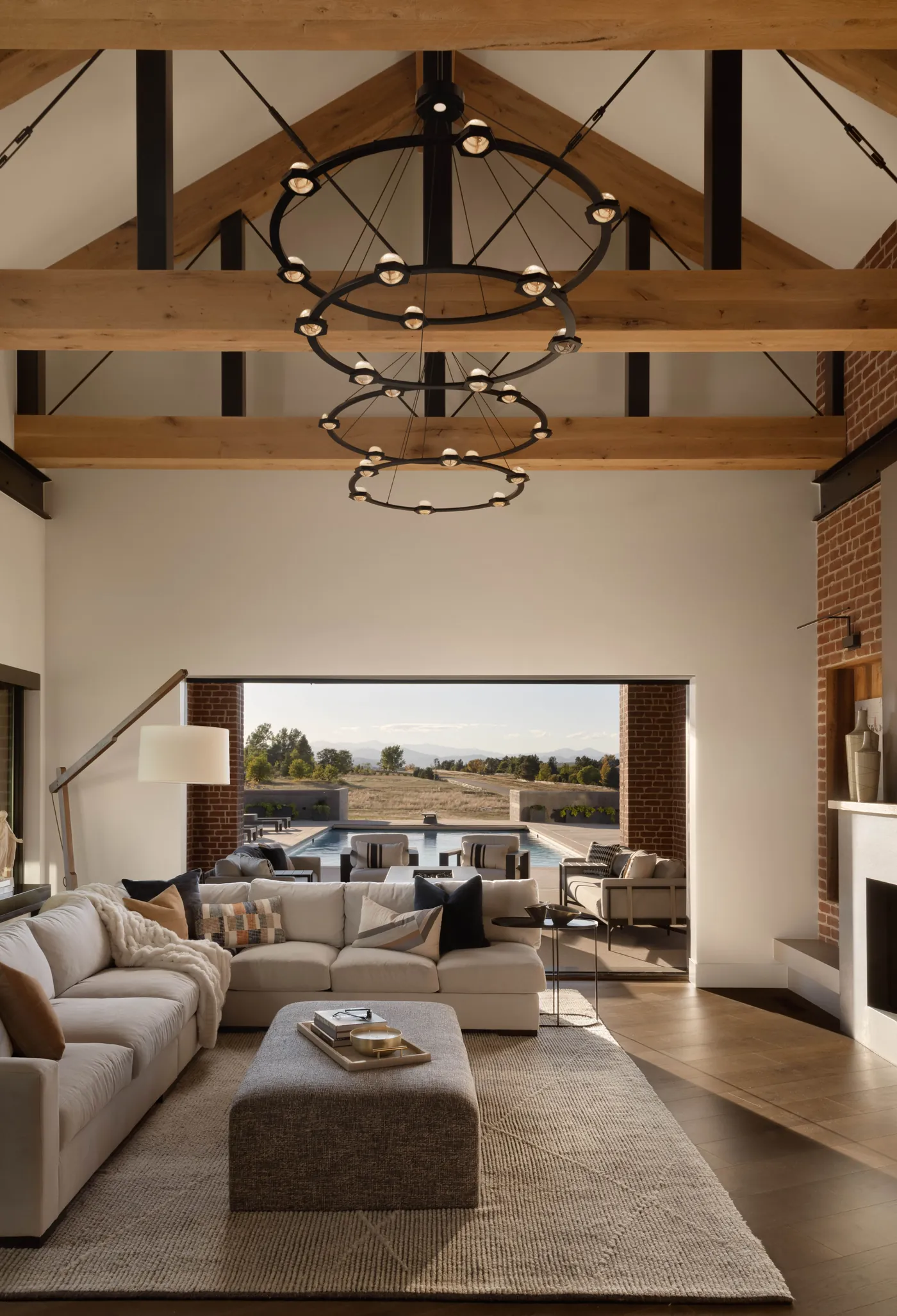

It is nine at night. The fire crackles. Someone curls up on the sofa with a book. Far above, the rafters rest in soft shadow, and the room feels even taller than it is.
That feeling does not happen by accident. In most tall rooms, the ceiling is the brightest thing in sight. That is where it goes wrong.
Light the lowest eight feet, where people sit and walk. Use sconces, lamps, picture lights, and light inside shelves. Add a few narrow beam ceiling lights for art and the fireplace.
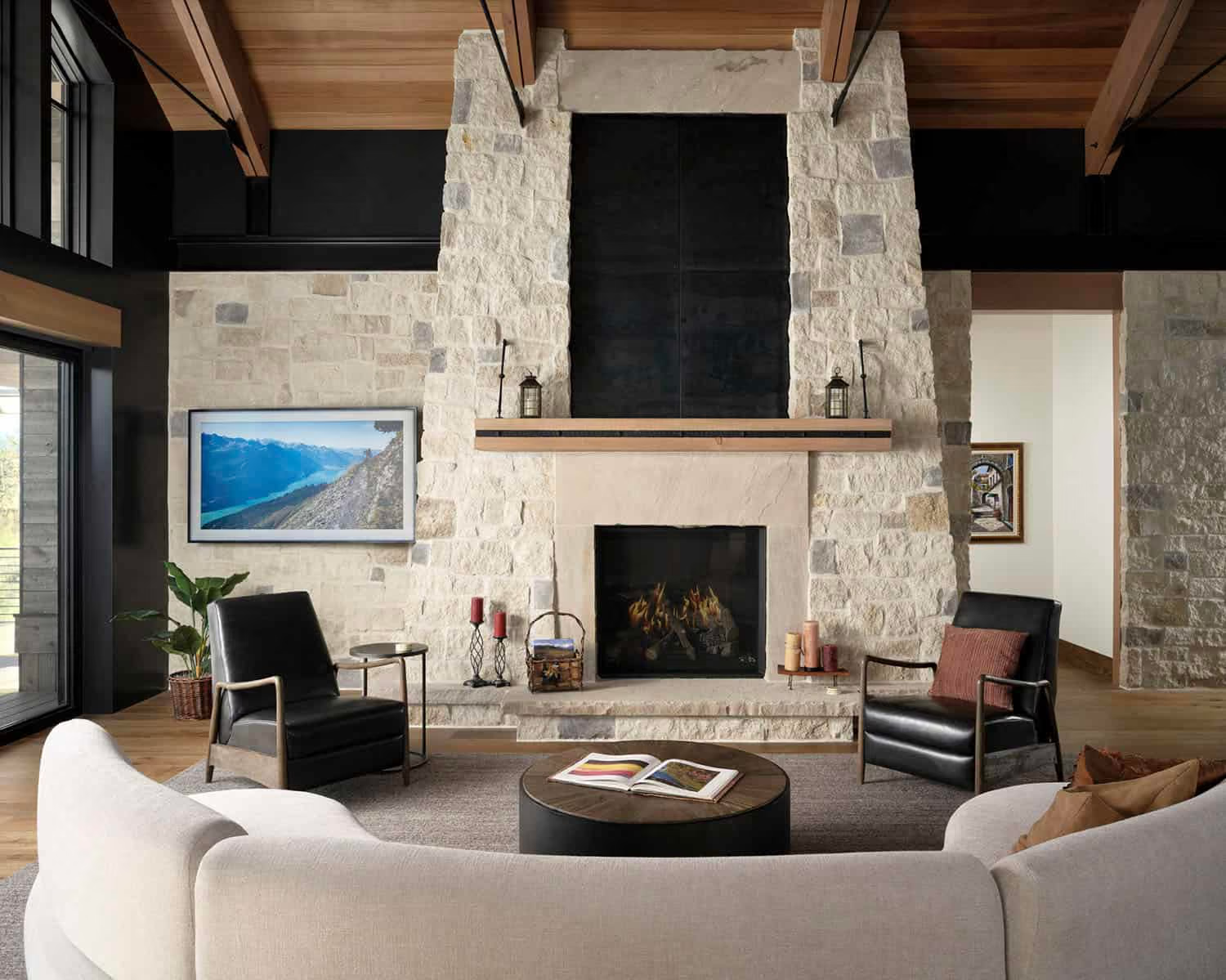
Then pick one thing up high to light, like wood trusses or a stone chimney. Keep that light warm and low.
Quick Tips
People live in the lowest eight feet
Use narrow beams, about 10 to 25 degrees
Hide the bulb to stop glare
Light one feature up high, not the whole ceiling
Test every scene at one percent

When you sit, your eyes are about four feet up. Everything you care about is near there. The fire, the table, the art, and your friends' faces.
Then the ceiling holds only a few exact accents. Six well aimed lights beat twenty four careless ones. Learn why in lighting design or lighting layout.
Move a light from a nine foot ceiling to an eighteen foot ceiling. Only about a quarter of the light reaches the room below.
A beam also spreads as it travels. A fifteen degree beam makes a pool about five feet wide from twenty feet up. So the fix is tighter beams, and fewer of them.
"QAV showed us what lighting can really do. Every room can pivot to match the mood at the press of a button, the ceilings are clean and beautiful, and one touch sets the whole house."
The Homeowners, Fox Hill
In a tall room, you look up a sloped ceiling right into the lights. So hiding the bulb matters more than brightness.
Read more in interior architectural lighting.
Some ceilings deserve light. Think of fir trusses, a plaster vault, or a tall stone chimney. Give it one move, like LED strips tucked on top of the beams.
Put it on its own control. Keep it warm and low. Do not light the whole ceiling evenly, or nothing stands out.
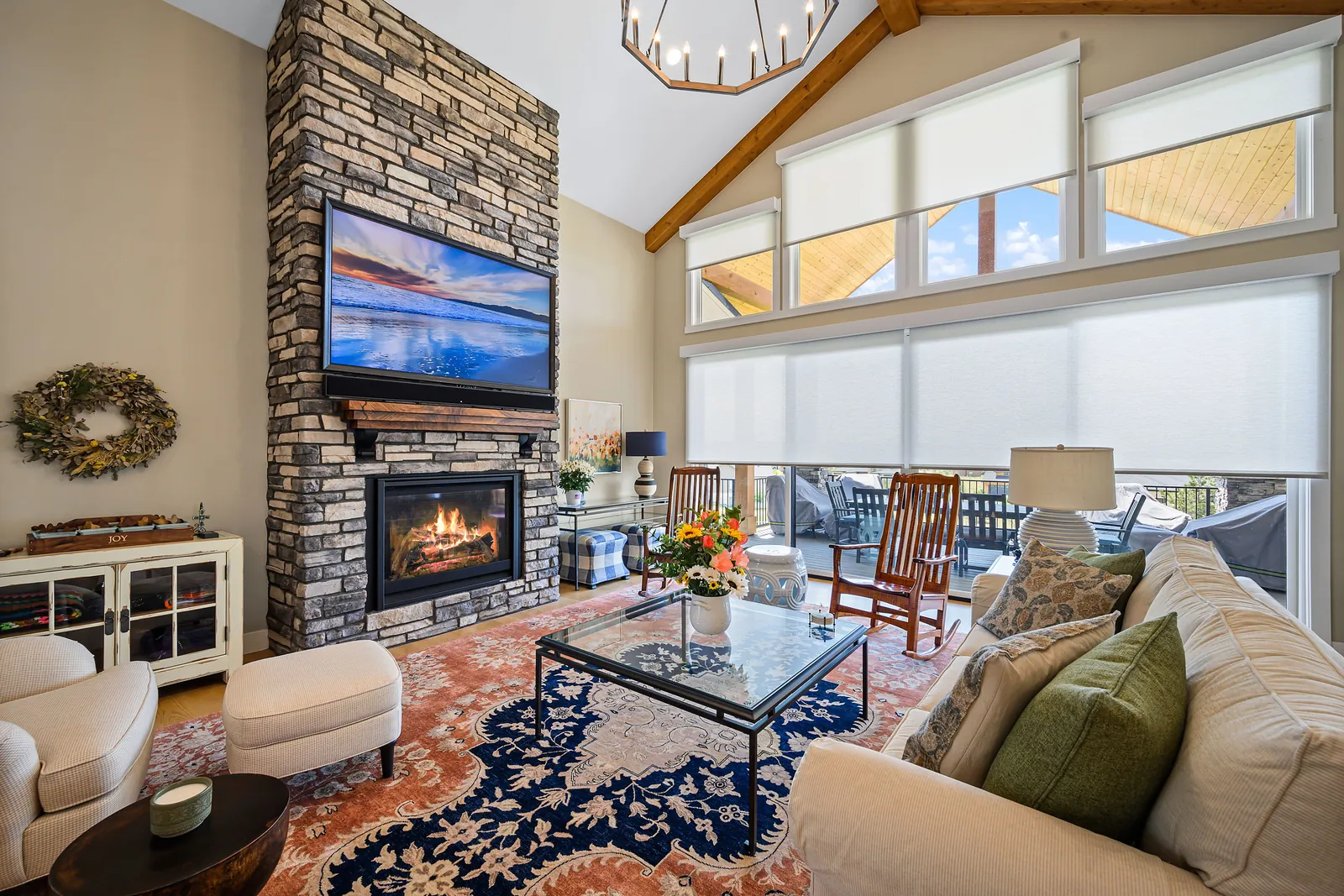
A chandelier in a two story room should glow, not light the floor. Check its size from the sofa, the stairs, and outside at night.
The best test is old school. Cut the shape from brown paper, hang it on string, and look at it after dark.
At nine at night, a great room runs very low. That is where mixed lights flicker or turn blue.
Match drivers to the controls, like a Crestron system, and test every scene at one percent. This is residential architectural lighting design carried down to the setting you use most. Pair it with the right keypads.
Every adjustable light gets aimed by hand after dark, with the furniture and art in place. Then the scenes get set to match the real room. QAV Client Care stays with you when the room changes.
"The lighting is what everyone comments on first."
The Homeowners, Estancia
QAV is a lighting and home technology firm in Centennial, Colorado. We design for homes across the Denver area and in mountain towns like Evergreen and Vail.
QAV is HTA Certified at the Estate Level, which puts us in the Top 1% of integrators in North America. Tyson Rabani sits on the Crestron Dealer Advisory Board for QAV. He is the only Colorado integrator on a board of about a dozen members worldwide.
Our Two Dog Vista project in Evergreen won the 2026 Crestron Home Technology Award for Best Entertainment Everywhere. See all our awards and recognition.
Planning a tall room? Start while the ceiling is still a drawing. ILLUMINATE shows how our lighting work is set up.
Visit the QAV Experience Center in Centennial, open by appointment. Or contact QAV to start your project.

Great room lighting is lighting for a big, open living room with a tall ceiling. The ceiling is often fourteen feet or more. It uses general light, task light, accent light on art, and decorative fixtures. All of it runs as scenes, not as separate switches.
Light the lower part of the room, where people sit and walk. Use sconces, lamps, picture lights, light in shelves, and light on stone. Add a few narrow beam ceiling lights for art, seats, and the fireplace. You can add one uplight move to show off trusses or a vault.
Use narrower beams, because a beam spreads as it travels. A fifteen degree beam makes a pool about two and a half feet wide from nine feet up. From twenty feet up, it makes a pool about five feet wide. For accents in a tall room, use beams of about ten to twenty five degrees.
Your eye judges brightness by walls, art, stone, and faces. Ceiling lights aimed straight down mostly light the floor. So the room measures bright but looks flat. Add light to walls, art, and shelves. It will look brighter than adding more downlights.
Pick the height by how it looks, not by one rule. Check it from the sofa, from the stairs and landing, and from outside at night. A simple test works best. Cut the shape from brown paper, hang it on string, and look at it after dark.
Only if the ceiling has something worth showing, like wood trusses, a plaster vault, or a stone chimney. Put that light on its own control. Keep it warm and low. A level that looks right by day is about twice too bright at night. Do not light the whole ceiling evenly.