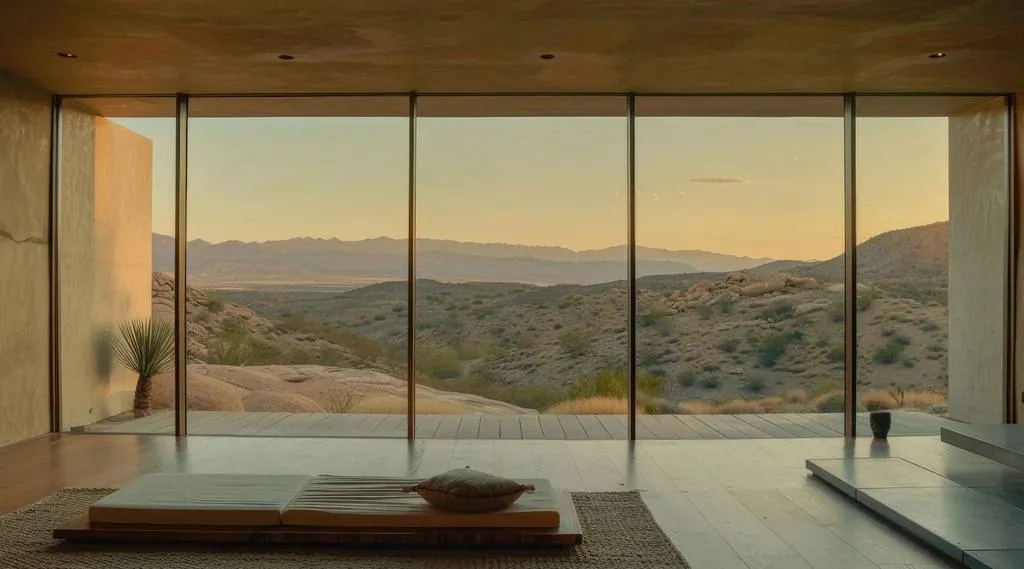


A bedroom that helps you sleep lets its light and shades follow the day. Tunable white lighting moves from cool, bright light in the morning to warm, low light at night, while automated shades open with the sun and close for darkness, all on a schedule you set once.
It is a little before six. The room is still dark, and then it is not, quite. The shades lift a few inches at a time, and the light above the bed begins to rise, pale and cool, the color of an early sky. No alarm has gone off. The room has simply decided that morning is here.
Fourteen hours later, the same room is a different place. The light has slipped to a low amber glow, the kind you might find in a good hotel bar. The shades have come down, and the street, the ridgeline, and the neighbor's porch light are gone. Nothing asks for your attention. The room is telling you, in its own quiet way, that the day is done.
This is what people mean when they talk about circadian lighting. The phrase sounds clinical. In practice, it feels like a room that pays attention.
This fall, CE Pro, a trade publication for the home technology industry, named the primary suite of a Park City, Utah, home the Gold winner for Best Master Suite in its 2026 Home of the Year awards. The home is called Pinnacle 2. The integrator was Nerve, a firm based in Park City. It is one of the clearest pictures we have seen of what a bedroom can do.
The suite is generous. CE Pro describes a bedroom, a sitting room, two offices, two bathrooms, a fitness room, and a sauna, joined to the outdoors by a bridge and a water feature. The goal was to make all of those spaces feel like one place, with lighting, shades, entertainment, climate, and automation working together. Nerve worked closely with the architect, the interior designer, and the lighting designer to get there.
At the heart of the suite is a circadian lighting system. Its fixtures are tunable white, which means each one can change both how bright it is and how warm or cool its light looks. Through the day, they shift on their own to follow the owners' natural rhythm of sleeping and waking.
There is good reason to care. Light is one of the strongest signals the body uses to set its internal clock, according to the Sleep Foundation. Bright light by day supports a healthy sleep and wake cycle, and too much light at night can get in the way of rest. A lighting system will not cure a restless night, and we would never promise that it will. What it does is make the good habits easy. The morning is bright before you open a curtain. The evening grows dim and warm before you reach for a switch.
In a room planned this way, the day begins softly.
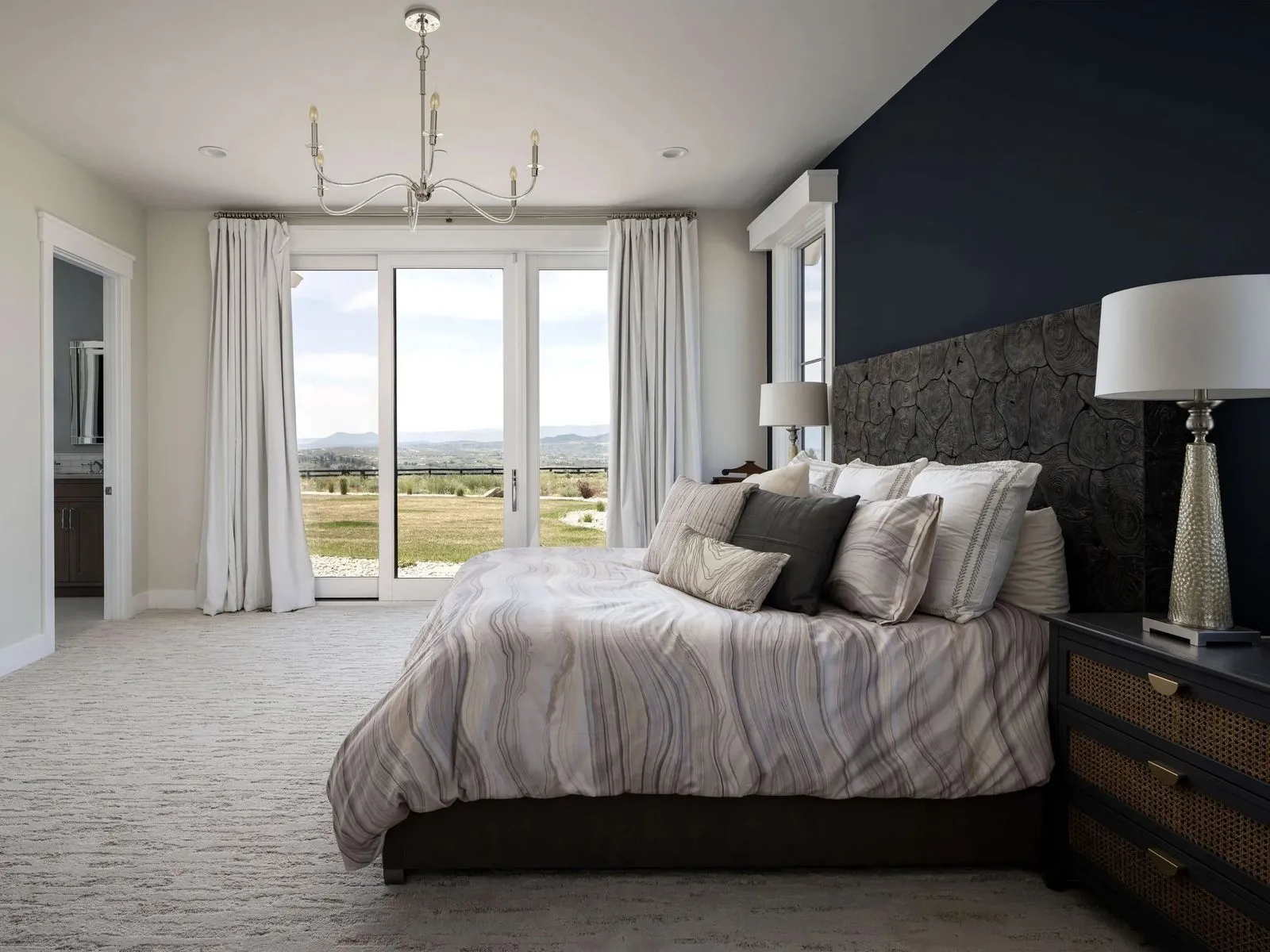
In Pinnacle 2, the fixtures themselves almost disappear. CE Pro notes trimless architectural fixtures, which sit flush in the ceiling with no visible ring, along with discreet speakers. Layers of light draw soft paths from the bedroom to the wellness rooms and out toward the outdoors, so you can find your way at night without flooding the room.
Light from fixtures is only half the story. The other half comes through the glass.
By midafternoon, the sun is high and the glass is bright.
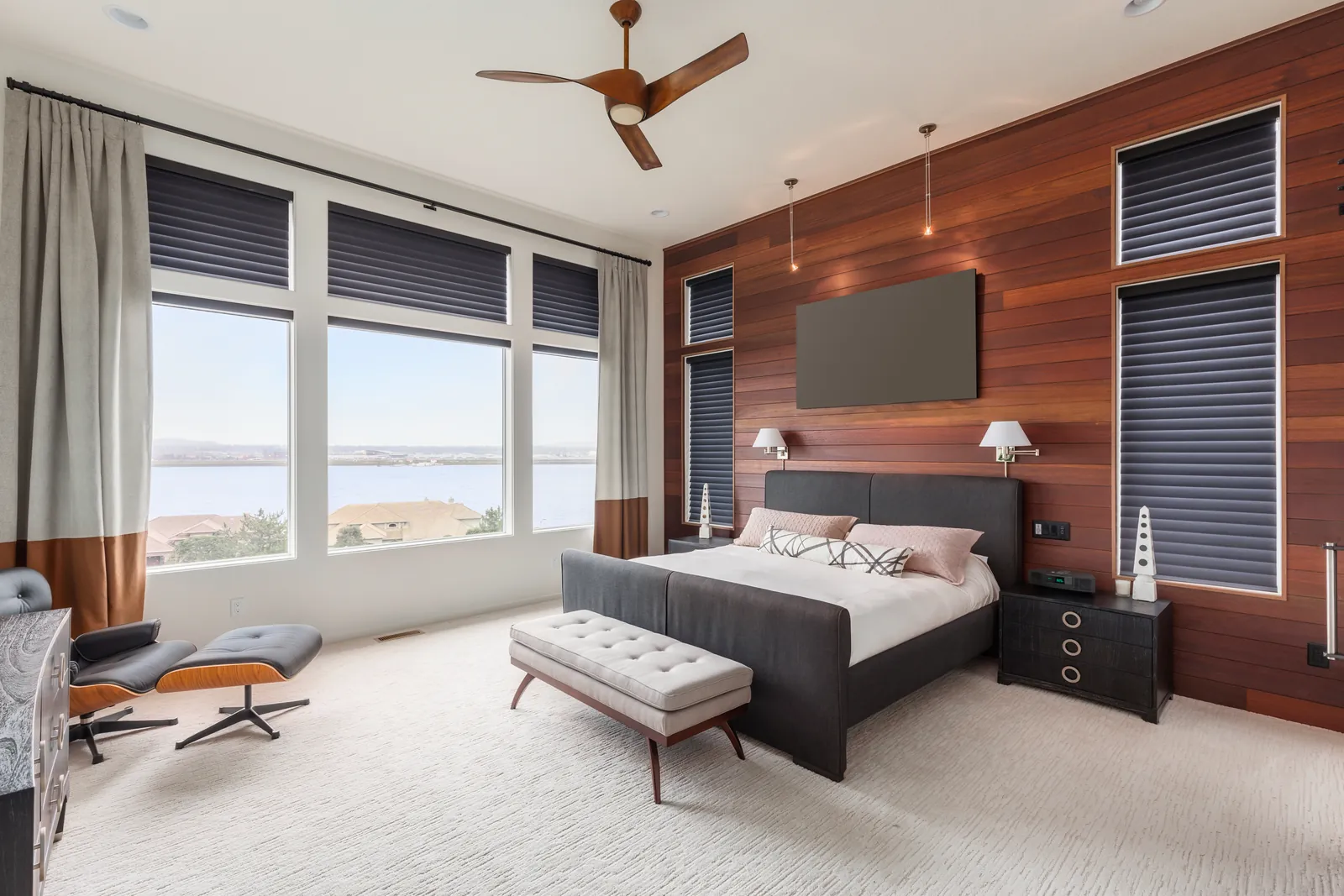
The suite uses two kinds of motorized shades. Solar shades soften glare and keep the view. Blackout shades close the room to the night. Both respond to daylight, to whether someone is in the room, and to the time of day. CE Pro credits them with balancing natural light, privacy, and comfort, keeping views open, and improving energy efficiency.
Closer to home, shades do the same quiet work.

Here is the part most people never see. The suite has tongue and groove wood ceilings, and every shade rests in a recessed pocket built into them. CE Pro calls this one of the project's most complex engineering feats. Each pocket had to be planned with the architect, the interior designer, and the builder long before installation. When a shade vanishes into a ceiling like that, it is because someone drew it there months earlier.
What sets Pinnacle 2 apart, in CE Pro's telling, is that it runs hands free. The automation follows daylight, occupancy, and personal schedules, and it stays flexible as routines change. When the owners want to take over, custom engraved keypads in glass and metal finishes sit on the wall, chosen to suit the interiors rather than compete with them.
That balance matters. A good bedroom system should be invisible on an ordinary Tuesday and obedient on a Saturday when you want to sleep in. The best ones ask very little of you. You tell the house when you like to wake and when you like to sleep, and it quietly handles the rest.
Then evening comes, and the room settles down with you.
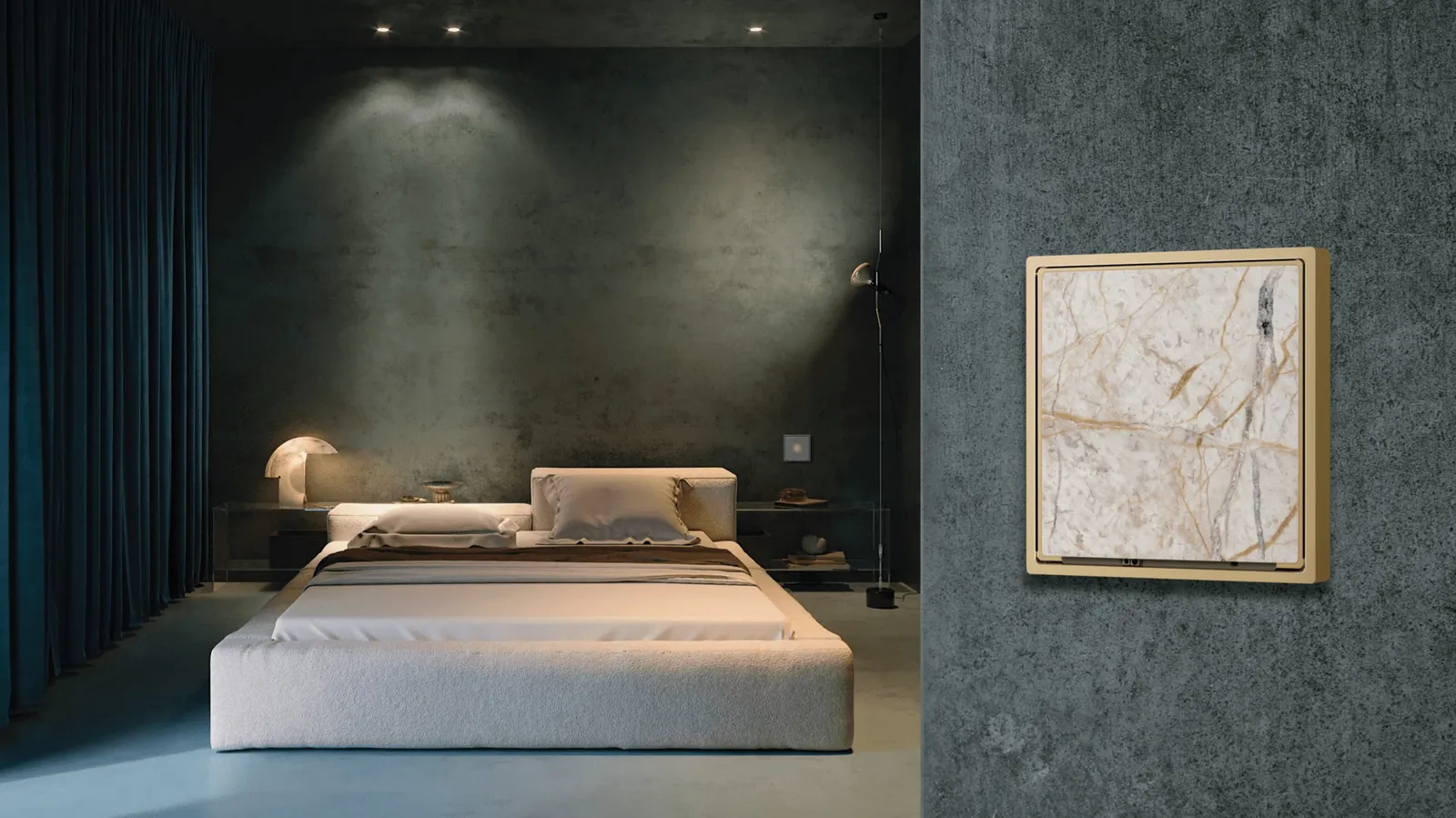
Colorado bedrooms have their own reasons to want this. Our mornings come early and bright, and the afternoon sun can pour in low over the mountains. Big windows are often the reason our clients fell for their homes. They are also the reason the bedroom is rarely truly dark.
At QAV, we design lighting and shades as one plan, not two trades that meet at the light switch. In a primary suite, that usually means tunable fixtures where they matter most, a pairing of solar and blackout shades, and a schedule shaped around the way you actually live. If you are building, the most valuable step is the one Pinnacle 2 shows so well: settle the shade pockets and the lighting plan before the ceilings close. If you are remodeling, there are still good options, and we will tell you plainly which ones suit your home.
If you are wondering about cost, we have written about what motorized shades cost in Colorado, where most land between about $1,000 and $2,500 per window in a QAV home, and about how lighting design is priced. Every home is different, so the real number comes from a conversation about yours.
Reading about light only goes so far. It is something you have to watch change around you. At the QAV Experience Center in Centennial, we can carry a room from sunrise to midnight in a few minutes, raise and lower the shades, and let you feel the difference for yourself. Visits are by appointment. Call us at (720) 734-3120 or send us a note, and we will find a time that suits you.
Source: CE Pro, "Circadian Lighting and Automated Shades Shape a Primary Suite" by Zachary Comeau, November 23, 2026. Background on light and sleep: Sleep Foundation, "Light and Sleep".

Circadian lighting uses tunable white fixtures that change brightness and color through the day. In a bedroom, that usually means cool, bright light in the morning and warm, low light in the evening, on a schedule that runs by itself.
Light is one of the strongest signals for the body's internal clock, and the Sleep Foundation notes that bright days and dimmer evenings support a healthy sleep cycle. No lighting system can promise better sleep, but a good one makes those habits easy to keep.
Many primary suites are happiest with both. Solar shades soften glare by day and keep the view, and blackout shades make the room dark at night. Both can serve the same window when they are planned early.
Often, yes. Wireless lighting controls and shade motors make many remodels possible without opening walls. Hidden ceiling pockets are easiest in new construction. We will look at your home and tell you honestly what fits.