

A Tuesday evening in January. The wind comes down off the foothills, a line goes somewhere past the ridge, and the block goes dark.
In the house with a generator, the darkness lasts ten seconds, sometimes thirty. Then an engine turns over along the side yard and the lights return, and with them the loud sound. The network has rebooted. Clocks blink in the kitchen. The engine will run until the utility restores service, and everyone inside will be aware of it the entire time. This is how it's been done for decades. Fortunately, today there are much better ways to handle energy independence and emergency preparedness.
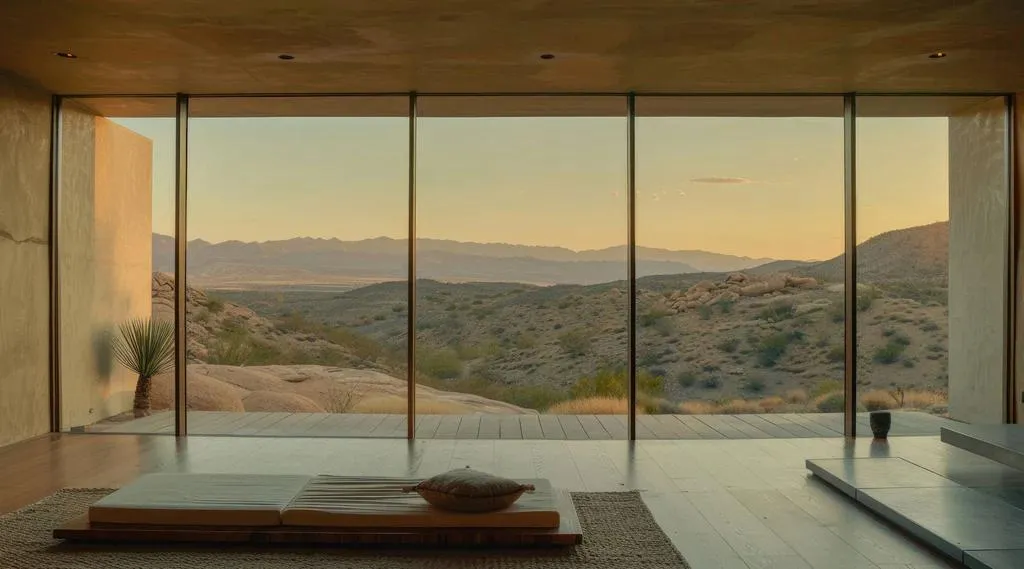
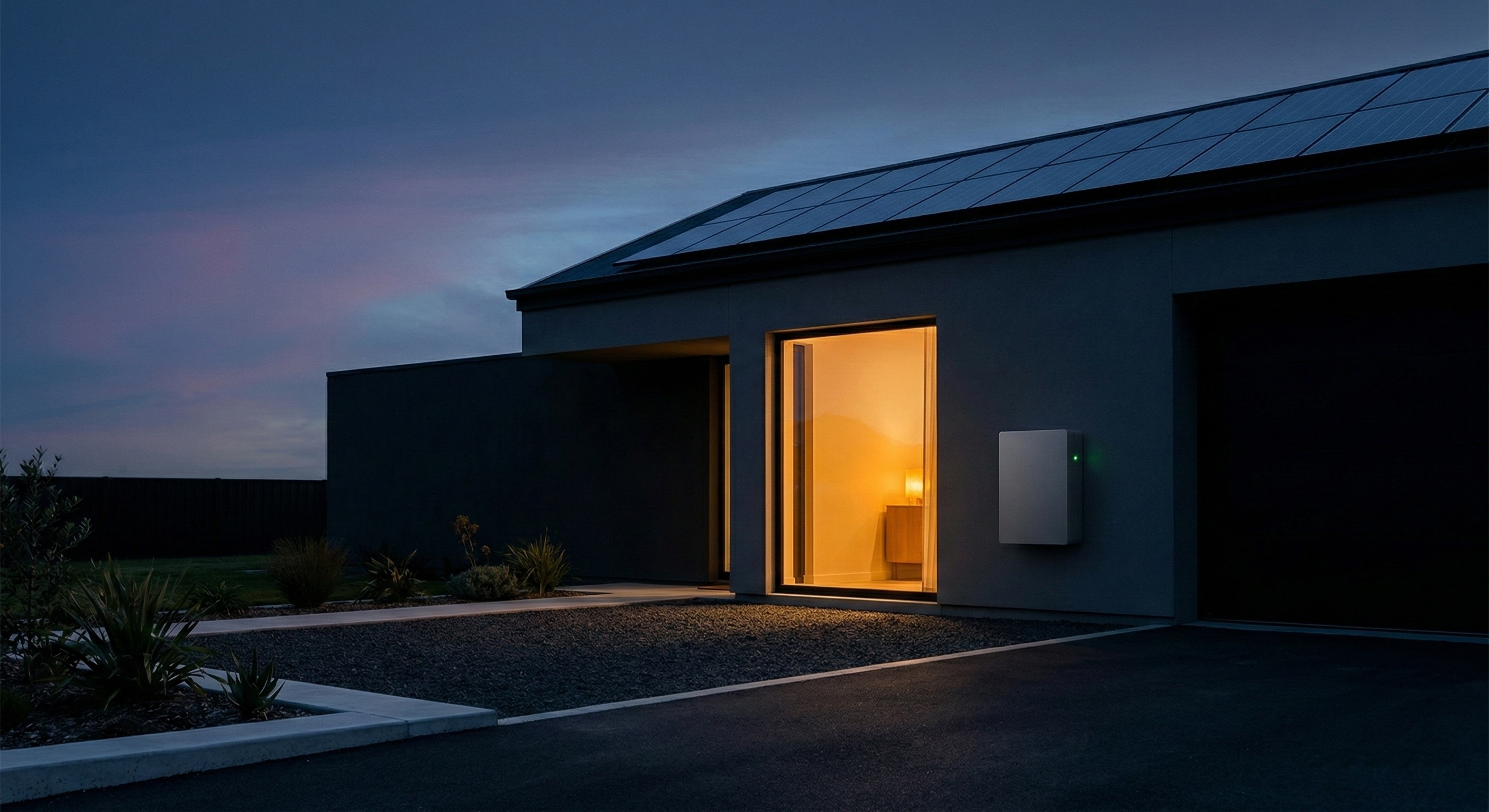
In the house with a battery, the transition is so smooth you will likely be unaware there's an outage at all.
No flicker. No pause. No sound. The film continues. The conversation does not stop. The outage is discovered the following morning, secondhand, from a neighbor. And best of all, the entire scope of products and services QAV offers is unaffected thanks to the lightning-fast transfer time. Batteries half compared to generators. A generator can still be part of the power plan; however, we are suggesting that it should not be THE power plan.
The standby generator was a fine answer to a problem of its era, and it remains a serious machine. It is also a combustion engine installed permanently beside a house that was otherwise designed with great care, and it behaves like one.
It requires fuel. Propane and diesel draw from a tank, and a tank empties. Natural gas draws from a utility line, dependable until the storm that took the power also reaches the gas system.
It requires maintenance. Oil, filters, service intervals, and an exercise cycle that starts the machine weekly and runs it for several minutes whether or not anything has gone wrong. That is a scheduled noise on the property for the life of the house.
And it requires placement. Clearance, a pad, and a position neither beneath a bedroom window nor within sight of the arrival. On a property where every other decision was made with intention, the generator is the one everything else gets arranged around.
A battery asks for none of it. No deliveries, no service calls, no weekly rehearsal. It occupies its space in silence, at full readiness, and most owners forget it is there until the evening it matters. Oftentimes, the batteries end up in far more ideal places, such as equipment rooms, mechanical rooms, and similar.
One argument for combustion deserves a straight answer rather than a deflection. A generator runs as long as it is fed. A battery runs until it is empty.
True, but also a little incomplete.
A battery paired with solar refills itself each day. The sun rises, the system charges, and the house begins every evening full again. That is not a tank anyone has to think about. It is a supply that renews on its own for as long as the outage lasts. Batteries can also be charged from the electrical grid as well.
The shape of the risk is worth understanding as well. The overwhelming majority of outages resolve in hours rather than days, and a properly sized battery covers that range without asking anything of the household. The generator pulls genuinely ahead in one scenario: a long multi-day event, with fuel on hand, and a fuel supply left intact.
As we mentioned earlier, some properties are right for both. For the outages Colorado families actually experience, the battery is quieter, cleaner, faster, and require nothing in return.
QAV brought the HelioWing by World4Solar to Colorado and launched it at our Experience Center in Centennial, where it is still the only one of its kind in the state, and where it is running now.
What distinguishes it is not the specification. It is the form.
The HelioWing is not a field of panels fastened to a roofline an architect spent months resolving. It is a canopy. A structure that shelters the space beneath it while generating the power above it, over a motor court, a drive, an arrival. Ground you already own, quietly doing a second job, with the roof of the house left exactly as it was drawn.
Beneath it, integrated lighting shapes the arrival after dark. An EV charger compatible with every electric vehicle on the market, sit beneath the same wing that powers your home. The HelioWing 7, for example, carries a 9.84 kWp solar panel array and up to 36 kWh of battery storage, governed by a hybrid inverter that decides continuously where power should go: into the house, into the battery, into the cars, back to the grid.
At the Colorado launch at the QAV Experience Center we powered a Ferrari 296 GTS on the charger, along with a television, an L-Acoustics DJ booth, and Gaggenau Wine storage filled with Rose and Chardonnay, all of it delivered from our beautiful Colorado sunshine.
A generator is insurance. It does nothing whatsoever until something goes wrong, and then it does exactly one thing.
A battery works every day of the year. It stores power when energy is inexpensive or free and releases it when energy is dear, so the house runs on its own supply through the costly hours. It steadies what the property draws from the grid. It charges the cars on sunlight rather than utility power.
While you sleep, the home runs on the sunshine it saved during the day. The batteries carry the house through the night, the cars charge quietly in the garage, and by morning everything is full again. Including you.
Then, on the evening the grid does fail, it happens to be the best backup system on the property.
Backup power is not a finish selection. It touches the electrical service, the panel, the conduit runs, and very often the site plan itself.
Brought into schematic design alongside the architect and the builder, all of it resolves into the project, and the canopy becomes part of the arrival sequence rather than an object parked near it. Introduced afterward, the conversation becomes trenching a finished drive and working around decisions already made.
The rule holds here as it does everywhere else worth doing properly. The earlier the technology designer is at the table, the more the home can do and the less it costs to do it.
None of this should be taken on faith.
The HelioWing is live at the QAV Experience Center in Centennial, the only one in Colorado. Stand beneath it. Look at how it is built. Watch what it carries. Ten minutes in front of a fully functional system settles the question faster than any specification sheet, and it is the surest way to know whether it belongs at your home.
Independence is the ultimate luxury. When the grid goes dark, the house should never notice.

For the outages most Colorado homes actually experience, yes. A battery switches over instantly with no interruption, makes no noise, needs no fuel, and requires no maintenance or weekly exercise cycle. A generator's advantage only appears in a long multi-day event where you also have fuel on hand.
It depends on the size of the battery and what you are running. The HelioWing carries up to 36 kWh of storage and is capable of powering an entire home. Paired with solar, it also recharges every day, so you begin each night full again rather than drawing down a fixed tank. We also have battery storage solutions from other partners, effectively allowing us to infinitely increase the amount of battery storage and runtime to meet your needs.
No, a battery can be installed on its own and charged from the grid. But solar is what makes it self-renewing. Without it, your batteries will most commonly be charged from the electrical grid. With it, the battery refills every day the sun comes up.
Yes. Batteries have operating ranges like any equipment, and a properly engineered system accounts for Colorado conditions in how it is specified and installed. This is one of several reasons the design matters as much as the hardware.
A solar and storage system by World4Solar that QAV brought to Colorado. Rather than panels on your roof, it is an architectural canopy that covers a drive or motor court while generating power above it, with up to 36 kWh of battery storage, a hybrid inverter, integrated lighting, and room for up to two level 2 EV chargers. This unique solution also ensures that your energy contractor never has to drill into the roof of your home.
The best time to do your energy plan is during the electrical one-line drawing process. Work closely alongside your architect and builder and ask these questions early. Backup power touches your electrical service, your panel, conduit runs, and often the site plan itself. Planned early it disappears into the project. Added later, you are trenching a finished driveway. And of course, it is also generally a smaller investment to do it early.